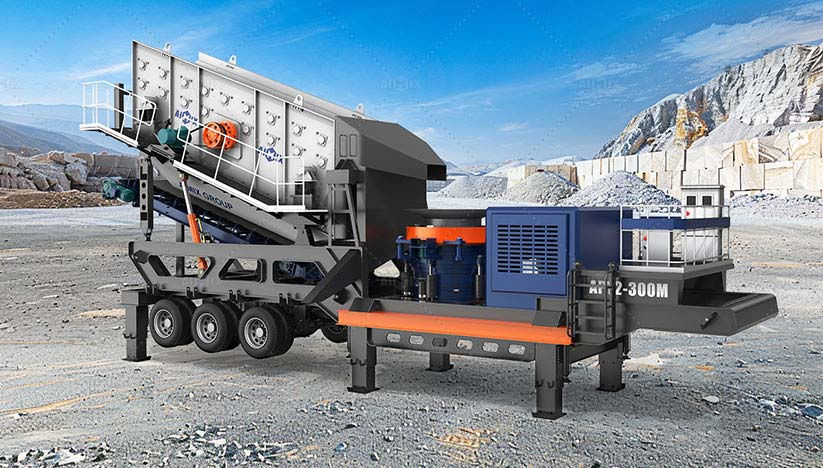
What Crushing Equipment Combination Is Best For Producing 0–5 Mm Sand From Basalt?
Basalt is one of the hardest and most abrasive materials used in construction. Many contractors choose it for high-strength concrete, road base, and asphalt projects. However, when your goal is to produce high-quality 0–5 mm sand, basalt becomes a real challenge. It wears equipment fast. It also requires precise shaping to meet grading standards.
So, what crushing equipment combination actually works best? More importantly, how can you balance output, particle shape, and operating cost? In this article, we will walk through practical solutions based on real project needs. This will help you choose a setup that fits your production goals and budget.

Understanding The Challenges Of Crushing Basalt Into Fine Sand
Before selecting equipment, you need to understand the material itself. Basalt has high compressive strength and strong abrasiveness. Because of this, not every crusher performs well in fine sand production.
At the same time, 0–5 mm sand requires tight control over particle size and shape. Poor equipment selection can lead to flaky particles, uneven grading, and high powder content. As a result, your final product may not meet construction standards.
Therefore, the right combination is not just about crushing. It is about shaping, screening, and controlling the entire process.
Key Requirements For Producing 0–5 Mm Sand
To move forward, let’s define what good sand production looks like. This will guide your equipment selection.
Stable And Consistent Output
You need a system that delivers continuous production. Sudden downtime increases costs and delays your project schedule.
Good Particle Shape
Cubic particles improve concrete strength and asphalt performance. Therefore, shaping equipment is essential.
Low Wear And Maintenance Cost
Basalt causes heavy wear. So, you should choose machines with durable liners and easy maintenance.
Efficient Fine Crushing Capability
The system must efficiently reduce material to below 5 mm without excessive re-circulation.
With these requirements in mind, we can now explore the most effective equipment combinations.

Recommended Crushing Process For Basalt Sand Production
In practice, a three-stage crushing and shaping process works best for basalt. This setup balances efficiency, quality, and cost.
Now, let’s break it down step by step.
Primary Crushing: Jaw Crusher
First, you need a strong primary crusher. A primary jaw crusher for sale handles large basalt rocks with ease. It reduces the size to a manageable level for the next stage.
This stage focuses on capacity and reliability. It does not need to produce fine material. Instead, it prepares the feed for secondary crushing.
Secondary Crushing: Cone Crusher
Next comes the cone crusher. This machine is ideal for hard materials like basalt. It provides better wear resistance compared to impact crushers at this stage.
More importantly, the cone crusher delivers a more uniform output size. This improves the efficiency of the final sand-making stage.
At this point, the material size is usually reduced to around 10–30 mm.
Tertiary Crushing And Shaping: Vertical Shaft Impact Crusher (VSI)
Finally, the VSI crusher plays a critical role. It produces fine sand and improves particle shape.
The VSI uses high-speed impact to break the material. This process creates more cubic particles and reduces flaky shapes. As a result, the final sand meets higher construction standards.
In addition, the VSI allows you to adjust output size by changing rotor speed and feed rate. This gives you better control over 0–5 mm production.

Why This Combination Works Best
Now that we have outlined the process, let’s look at why this combination performs so well.
First, each machine handles a specific task. The jaw crusher focuses on large rocks. The cone crusher ensures efficient reduction. The VSI handles shaping and fine crushing.
Second, this setup reduces wear costs. Instead of overloading one machine, the workload spreads across multiple stages. This extends equipment life.
Third, it improves final product quality. The VSI ensures better particle shape, which is critical for high-grade concrete and asphalt applications.
Therefore, this combination achieves both performance and cost efficiency.
Optional Enhancements For Better Results
In real projects, many contractors go beyond the basic setup. They add supporting equipment to improve efficiency and product quality.
Let’s look at some practical upgrades.
Vibrating Screen For Accurate Classification
A vibrating screen separates materials by size. It ensures that only qualified 0–5 mm sand moves forward.
Oversized material returns to the crusher. This creates a closed-loop system and improves overall efficiency.
Sand Washing Machine
If your project requires clean sand, a washing system is essential. It removes dust and impurities.
This is especially important for concrete production, where cleanliness affects strength and durability.
Dust Control System
Basalt crushing generates a lot of dust. A proper dust collection system improves the working environment and meets environmental regulations.

How To Choose The Right Configuration For Your Project
Although the standard combination works well, every project is different. Therefore, you should consider several factors before making a decision.
First, evaluate your required output. A small project may not need a full three-stage system. However, large-scale production often requires it.
Second, consider your budget. While a complete system costs more upfront, it reduces long-term operating costs.
Third, analyze your site conditions. Limited space or transportation challenges may require a compact or mobile solution.
Finally, think about your final application. High-end projects demand better particle shape and stricter grading control.
By aligning these factors, you can choose a solution that truly fits your needs.
Conclusion: Build A System That Works For Your Business
Producing 0–5 mm sand from basalt is not easy. However, with the right equipment combination, you can achieve high efficiency and excellent product quality.
In most cases, a jaw crusher + cone crusher + VSI crusher forms the best solution. This setup delivers stable output, good particle shape, and controlled operating costs.
More importantly, it helps you stay competitive in today’s construction market. High-quality sand leads to better concrete and stronger infrastructure. That means more opportunities for your business.
If you are planning a basalt crushing project, now is the time to evaluate your options. Talk to experienced suppliers. Compare different configurations. Most importantly, choose a system that matches your long-term goals.
Looking for a customized crusher equipment solution? Contact us today. Our team can help you design a complete basalt sand production line based on your project scale, budget, and local conditions.