
How to Choose an Asphalt Batch Mix Plant for Selling Asphalt to Multiple Projects in Indonesia Effectively?
In Indonesia, road construction grows fast every year. Cities expand. Industrial parks increase. Rural connectivity projects rise. For many contractors and material suppliers, selling asphalt to multiple projects becomes a serious business opportunity. However, choosing the right batch asphalt mixing plant directly affects production cost, asphalt quality, delivery speed, and long-term profit. If you plan to supply asphalt to several projects at the same time, you must think beyond basic capacity. In this article, I will share practical, field-based guidance to help you choose the right asphalt batch mix plant and build a profitable asphalt supply business in Indonesia.

Understanding the Real Business Model of Selling Asphalt to Multiple Projects
Before choosing equipment, it is important to clearly understand how this business works in real life. Many buyers only focus on plant price, but successful operators focus on operational flow.
When you sell asphalt to multiple projects, you must handle unstable demand, different mix designs, and strict delivery time. One project may require dense-graded mix, while another needs an open-graded surface. At the same time, traffic in Indonesian cities can delay transport. Therefore, your plant must support fast recipe switching, stable quality control, and flexible production scheduling.
Moreover, Indonesia has diverse jobsite conditions, from coastal roads to mountainous highways. This means your asphalt plant should adapt to different aggregates and moisture conditions. Once you understand this business reality, the next step becomes clearer.
Choosing the Right Production Capacity Based on Market Demand
After understanding the business model, you need to match plant capacity with real demand. Capacity selection is not about “bigger is better.” It is about “right size for stable profit.”
If you plan to supply 2–3 small municipal projects, a 60–80 tons per hour asphalt batch mix plant may be enough. On the other hand, if you plan to serve highways and industrial zones at the same time, a 120–160 tons per hour model makes more sense.
In Indonesia, many successful asphalt sellers choose mid-range capacity because it balances fuel consumption and output. Too small capacity leads to long waiting times for trucks. Too large capacity increases fuel waste when production fluctuates. Therefore, you should calculate your daily target volume based on real signed contracts, not just future expectations.

Why Batch Mix Technology Matters for Multi-Project Asphalt Sales
Once capacity is clear, plant technology becomes the next key factor. For selling asphalt to multiple projects, batch mix technology offers clear advantages.
Batch mix asphalt plants allow you to change formulas quickly. You can adjust bitumen content, filler ratio, and temperature settings from the control panel. This flexibility helps you win more contracts because you can meet different technical standards.
In addition, hot asphalt mixing plant can provide better mixing uniformity. This results in stable asphalt performance on the road. When your asphalt performs well, contractors trust you more. Over time, repeat orders become easier to secure. This connection between technology and market trust often decides who dominates local asphalt supply markets.
Evaluating Core Components That Affect Long-Term Stability
Now that you understand technology, you should focus on core components. These parts decide whether your plant will run smoothly for years or cause frequent downtime.
Drying Drum and Burner System
The drying drum must match Indonesian aggregate moisture levels. In coastal and tropical areas, aggregates usually carry higher water content. A strong burner system helps you maintain stable temperature without wasting fuel. As a result, your fuel cost stays under control, and your output remains stable.
Mixing System and Twin-Shaft Performance
The mixer structure directly influences mixing speed and uniformity. A strong twin-shaft mixer offers faster cycles and better coating of aggregates. This capability becomes critical when you supply asphalt to multiple sites on the same day.
Dust Collection and Environmental Compliance
Indonesia enforces stricter environmental rules year by year. A high-efficiency bag filter system reduces dust emissions. This protects your business license and builds a positive image with local authorities. In the long run, environmental compliance becomes a competitive advantage rather than a cost.
Control System and Automation: Key to Managing Multiple Orders
As your asphalt business grows, manual control becomes inefficient. Therefore, automation plays a vital role.
A modern control system allows you to store multiple mix recipes. You can switch between them with a few clicks. At the same time, production reports help you track fuel consumption, output volume, and error records. These data support better business decisions.
Furthermore, remote monitoring functions help you supervise the plant even when you are not onsite. This gives you peace of mind and helps you handle multiple projects without losing control.
Mobility vs. Stationary: Choosing the Right Plant Structure
After control systems, you should consider plant structure. This decision depends on how you plan to serve different project locations.
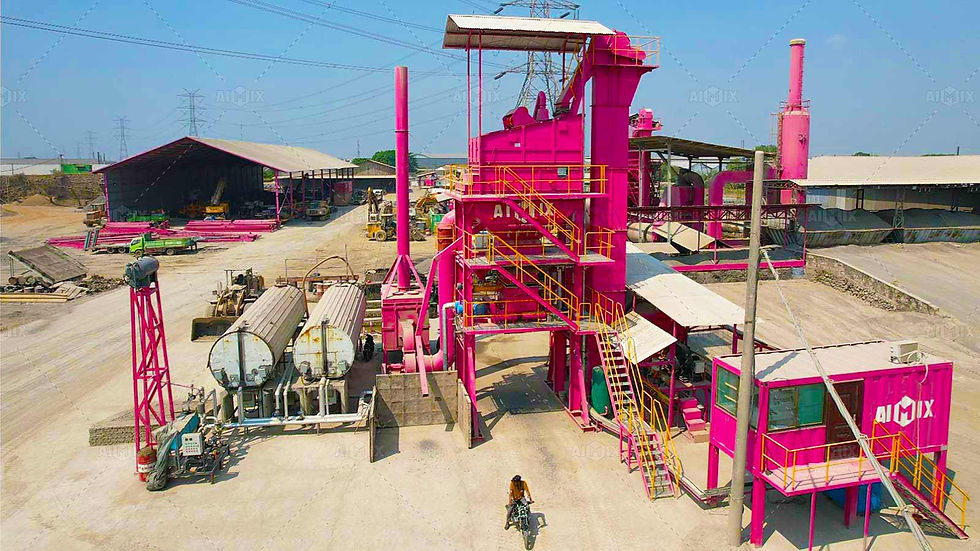
If your target projects spread across different provinces, a mobile asphalt plant for sale or semi-mobile asphalt batch mix plant reduces relocation time. You can dismantle and reinstall faster. This flexibility shortens your response time when new projects start.
However, if you focus on long-term supply to urban areas, a stationary plant offers stronger foundation stability and lower operating cost. Many Indonesian asphalt sellers choose a stationary plant near industrial zones and combine it with an efficient truck fleet to cover multiple sites.
Fuel Type and Energy Cost Optimization in Indonesia
Energy cost plays a large role in asphalt production profit. In Indonesia, diesel, heavy oil, and natural gas are common fuel options.
Diesel offers easy availability and flexible operation. Heavy oil reduces cost but requires a stable supply chain. Natural gas provides cleaner combustion where infrastructure exists. Therefore, you should select a burner system that supports multiple fuels. This flexibility protects your business when fuel prices fluctuate.

Installation, After-Sales Service, and Local Technical Support
Even the best equipment cannot perform without proper installation and service. This is especially true when you want to supply multiple projects without interruption.
Local technical support reduces downtime. Fast spare parts supply prevents long production stops. Skilled engineers help you optimize daily operation. Therefore, you should choose a supplier with real service capability in Indonesia, not only a sales office.
This factor often separates long-term profitable plants from short-lived investments.
Common Mistakes to Avoid When Buying an Asphalt Batch Mix Plant
At this stage, it helps to understand typical mistakes many buyers make.
First, some buyers overestimate early-stage demand. This leads to oversized plants and wasted resources. Second, some ignore maintenance cost and only focus on initial price. Third, some choose suppliers without local service teams and face long downtime when problems occur. Learning from these mistakes helps you avoid expensive lessons.

How I Help Asphalt Suppliers Succeed in the Indonesian Market
After understanding all technical and business factors, selecting a reliable partner becomes the final piece of the puzzle. This is where I can support your success.
At AIMIX, I focus on helping clients build real, profitable asphalt supply businesses in Indonesia. I do not just sell equipment. I analyze your target market, project types, and growth plans. Then I recommend the right asphalt batch mix plant configuration. We also provide local installation teams, operator training, and long-term technical support.
Because we understand Indonesian construction conditions, aggregate characteristics, and fuel environments, our solutions match real project needs rather than theoretical performance.
Start Building Your Multi-Project Asphalt Supply Business Today
If you plan to sell asphalt to multiple projects in Indonesia, the right asphalt batch mix plant is your foundation. With the correct capacity, reliable components, smart control systems, and strong local support, you can build a stable and scalable business.
I invite you to connect with AIMIX and discuss your plan. Let us help you choose a plant that fits your market, supports your growth, and delivers long-term value. Together, we can turn your asphalt supply idea into a profitable and sustainable business.


