
Should 60 m³/h Concrete Batching Plant Be Deployed for 3-House Complex in Remote Sulawesi, Indonesia?
When planning small-scale construction projects in remote areas, such as a 3-house complex in Sulawesi, Indonesia, contractors face multiple challenges. Limited access to construction materials, transportation difficulties, and the need for efficiency all play a role. One crucial decision is whether to deploy a 60 m³/h concrete batching plant Indonesia. This article explores the feasibility, benefits, and practical considerations from both the contractor’s and client’s perspective.

Understanding the Project Scope
Before investing in any equipment, it is essential to understand the project’s scale. A 3-house complex generally requires between 120 to 180 m³ of concrete, depending on the design and foundation type. Given this volume, choosing the right batching plant directly affects productivity, cost, and project timelines.
In remote areas, the transportation of ready-mix concrete is often impractical due to poor road conditions. Therefore, having an on-site concrete batching plant can save time, reduce material waste, and improve construction quality. This makes the 60 m³/h plant an attractive option, but we must examine the operational practicality and cost-effectiveness carefully.
Why a 60 m³/h Batching Plant Could Be Suitable
1. Adequate Production Capacity
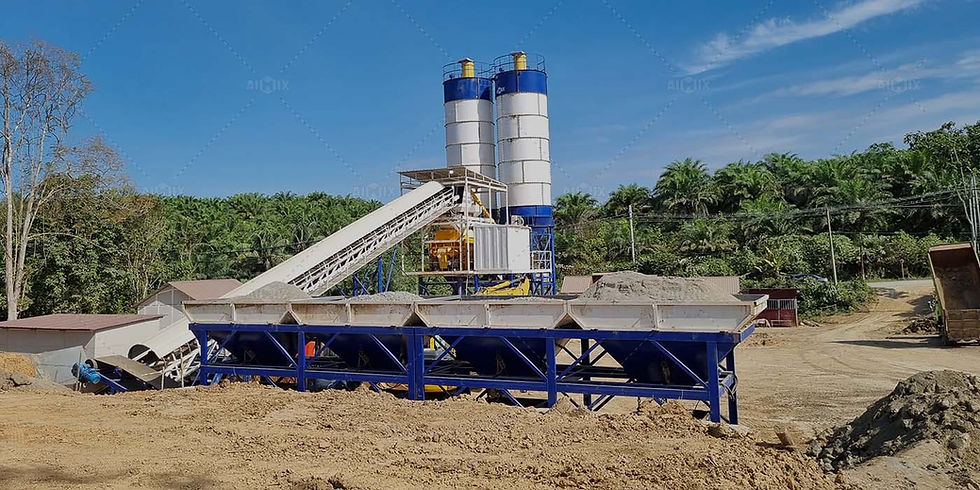
A 60 m³/h ready mix concrete plant produces enough concrete to complete small-scale projects efficiently. For a 3-house complex, the plant can deliver 60 cubic meters per hour, which is more than enough to meet daily pouring needs without causing delays. Contractors can schedule multiple pours in a single day, which speeds up the overall construction timeline.
2. Cost and Resource Efficiency
Compared to larger plants, a 60 m³/h unit consumes less electricity and requires fewer operators. This makes it ideal for projects with limited manpower and budget. Additionally, being able to mix concrete on-site reduces transport costs and minimizes the risk of material shortage due to delivery delays.
3. Flexibility in Remote Areas
Remote locations in Sulawesi often face logistical challenges, such as uneven roads and limited access to suppliers. A 60 m³/h batching plant is compact and relatively easy to transport and assemble. Contractors can relocate it to nearby projects or even use it for future developments, enhancing long-term investment value.

Considerations Before Deployment
While the 60 m³/h plant seems ideal, careful planning is necessary. Contractors should evaluate site conditions, available space, and power supply. Additionally, local labor must be trained to operate the plant safely and efficiently. Maintenance accessibility is another important factor, as remote areas may lack spare parts or technical support.
Moreover, understanding the construction schedule is critical. If the project has tight deadlines, planning concrete pours in advance ensures continuous workflow and prevents downtime. By considering these aspects, contractors can maximize efficiency and avoid common pitfalls.
Practical Tips for Successful Deployment
1. Pre-Project Planning
Survey the site carefully and prepare a layout that accommodates the plant, storage of raw materials, and movement of workers and machinery. Early planning reduces delays and helps in smooth execution.
2. On-Site Quality Control
Even with the right equipment, concrete quality must be monitored closely. Test the mix before major pours to ensure strength and durability. This is particularly important for structures in remote areas where repair options are limited.
3. Safety Measures
Implement clear safety protocols. Ensure operators wear protective gear and follow standard procedures. Safety not only protects the team but also reduces the risk of costly delays caused by accidents.
Conclusion: A Strategic Choice
Deploying a 60 m³/h concrete batching plant for a 3-house complex in remote Sulawesi offers several advantages, including sufficient capacity, cost efficiency, and operational flexibility. However, successful implementation depends on careful planning, site preparation, and adherence to quality and safety standards. From both contractor and client perspectives, this solution makes small-scale construction in remote areas more practical and efficient.
Investing in the right equipment can transform the construction experience, reduce costs, and ensure timely project completion. For contractors looking to build efficiently in Sulawesi or similar remote locations, a 60 m³/h batching plant is a strategic choice. Contact concrete batching plant suppliers today to learn more about suitable concrete batching solutions for your projects.

